RECORD 01
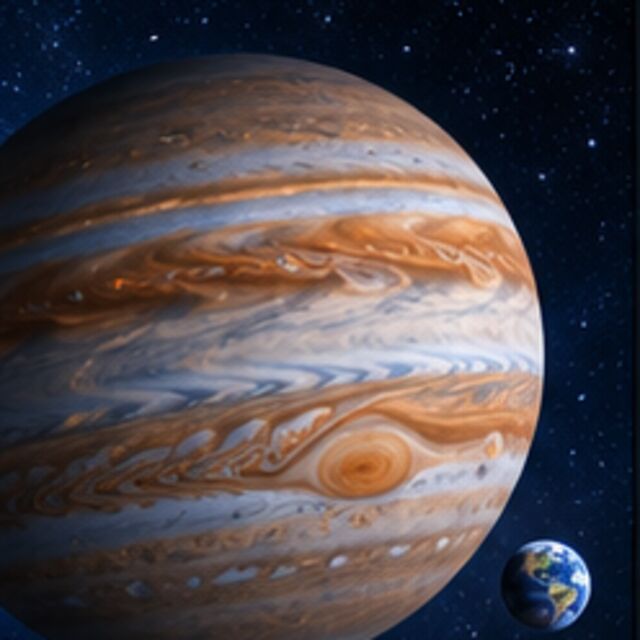
The largest planet — Jupiter
Jupiter is the largest planet in the Solar System. More than a thousand Earths could fit inside it by volume, although it is made mostly of gas.
1,000+ Earths by volumeTEO KOSMOS FOR YOUNG EXPLORERS
Twenty amazing records that reveal the biggest, hottest, fastest and most surprising things in space.
Jupiter is the largest planet in the Solar System. More than a thousand Earths could fit inside it by volume, although it is made mostly of gas.
1,000+ Earths by volume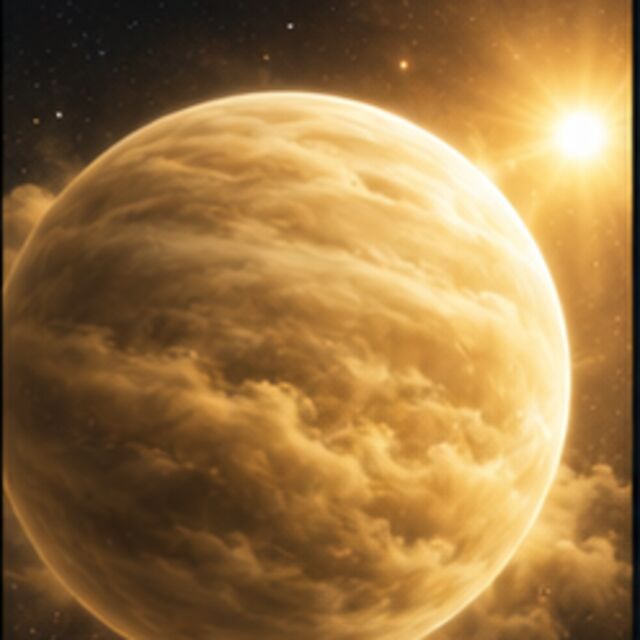
Venus is not the closest planet to the Sun, but its thick atmosphere traps heat. Its powerful greenhouse effect makes the surface hotter than a blazing oven.
≈ 465 °C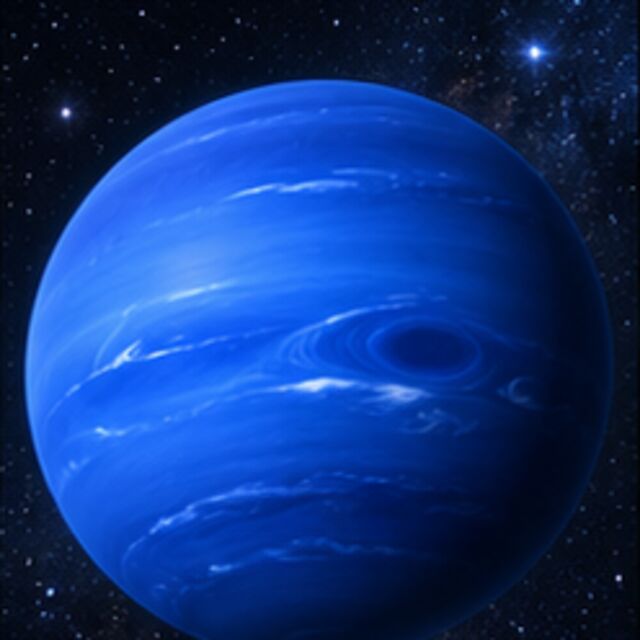
Distant Neptune has some of the fastest winds on any planet. They can race faster than a high-speed train.
2,000+ km/h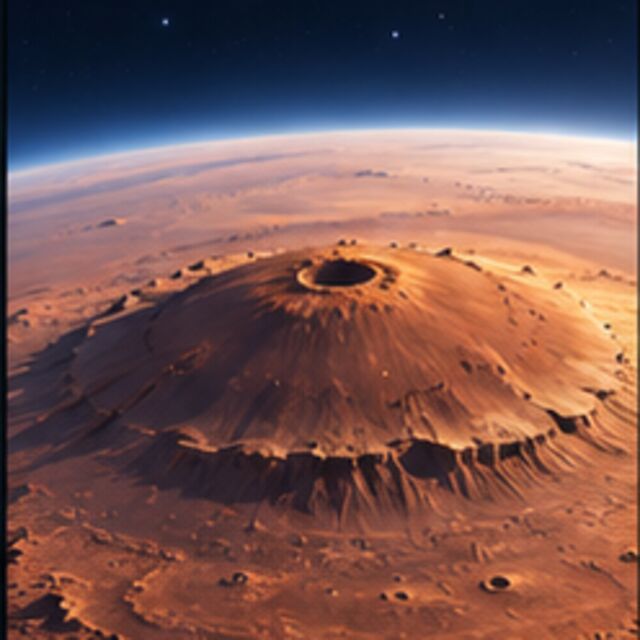
Mars is home to Olympus Mons, the largest known volcano in the Solar System. Its slopes are so broad that it is hard to see the whole mountain at once from the Martian surface.
≈ 22 km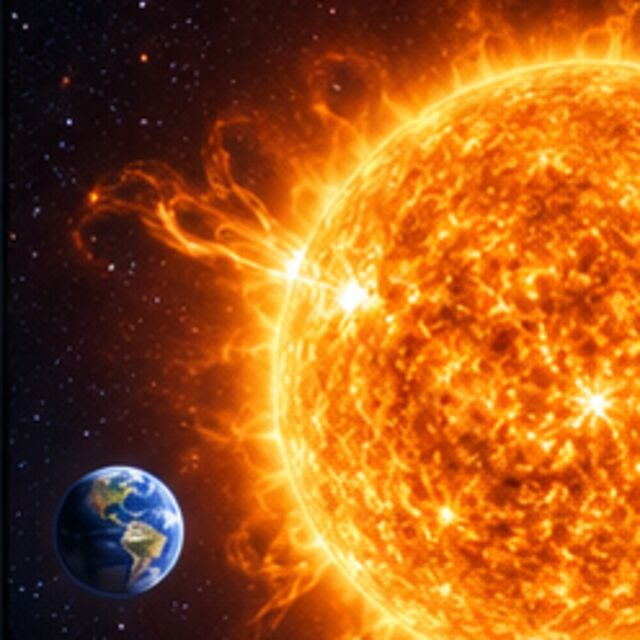
The Sun is our nearest star and Earth’s main source of light and warmth. It looks bigger than other stars only because we live close to it.
≈ 150 million km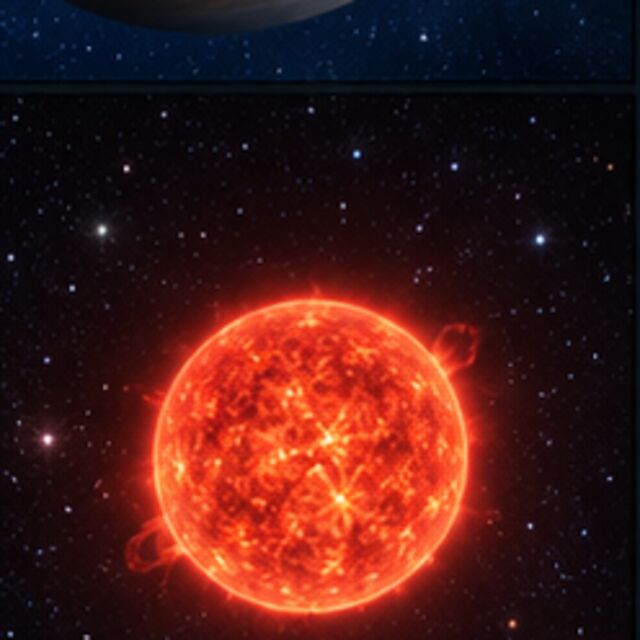
Proxima Centauri is a small red star in another stellar system. Even at the speed of modern spacecraft, a trip there would take thousands of years.
4.24 light-years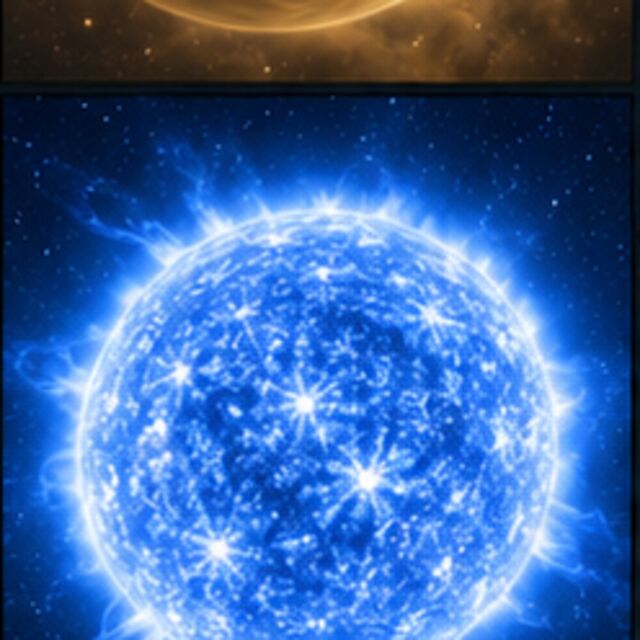
A star’s colour hints at its temperature. Blue stars are hotter than yellow and red stars, even though blue often feels like a cool colour to us.
tens of thousands of °C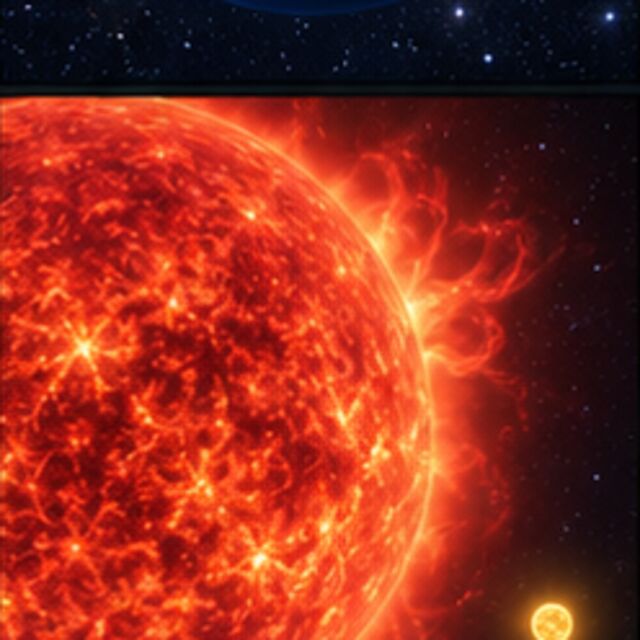
Supergiant stars can be so large that, if one replaced the Sun, its outer layers could stretch far beyond Earth’s orbit. That does not always mean it is hundreds of times heavier.
hundreds of solar radii
The centres of large galaxies can hide supermassive black holes. Their masses equal millions or even billions of our Suns.
billions of solar masses
The event horizon is an imagined boundary around a black hole. Once it is crossed, even light cannot return outward.
the speed of light
Black holes can rotate, dragging nearby space along with them. Astronomers study that spin by watching the hot gas around them.
near light speed
A quasar is the very bright core of a distant galaxy powered by a supermassive black hole. Gas falling toward it heats up and releases enormous amounts of light.
as bright as galaxies
Our galaxy is a vast stellar home for the Sun. It holds so many stars that counting them one by one would be impossible.
hundreds of billions of stars
The Andromeda Galaxy is our nearest large galactic neighbour. In a dark sky, you can see it with your unaided eyes as a faint patch of light.
≈ 2.5 million light-years
Galaxies come in many sizes, from tiny satellites to true giants. Light needs an astonishing amount of time to cross a large galaxy from edge to edge.
hundreds of thousands of light-years
When telescopes study the farthest galaxies, they see ancient light. It is like a cosmic time machine showing the early Universe.
13+ billion years of travel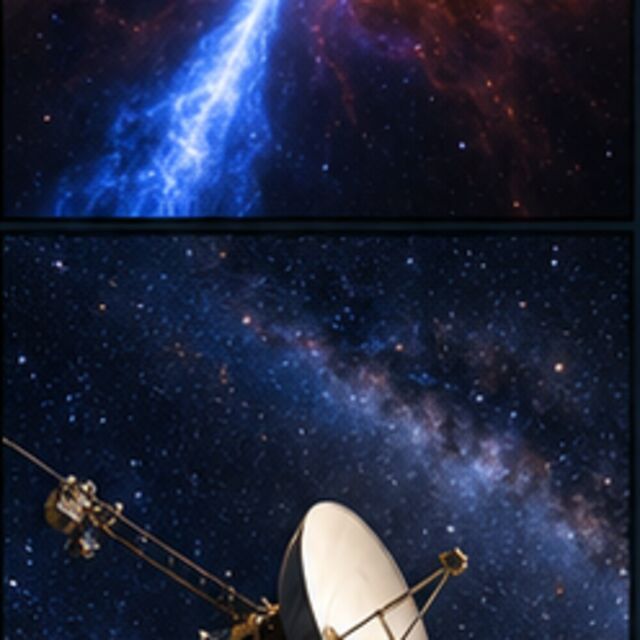
Voyager 1 launched in 1977 and travelled far beyond the planets. It still sends faint signals from interstellar space.
launched: 1977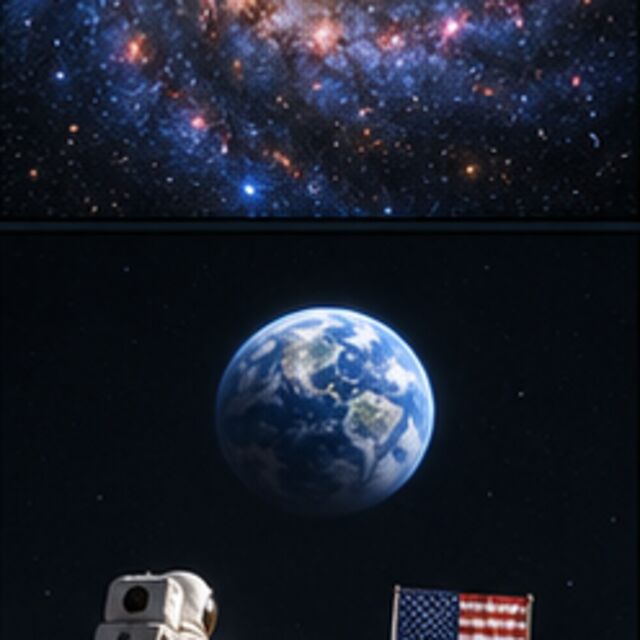
In 1969, Neil Armstrong and Buzz Aldrin became the first people to walk on the Moon. The mission showed that humans can explore other worlds.
1969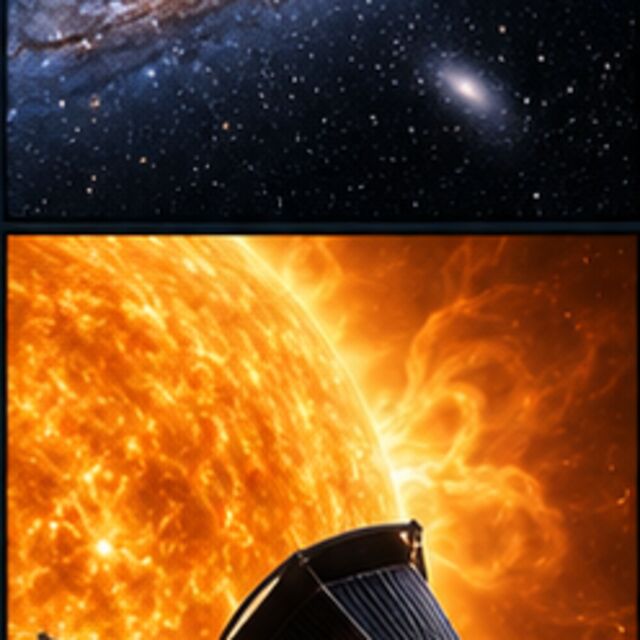
Parker Solar Probe was built to fly through the Sun’s outer atmosphere. Its heat shield helps the spacecraft endure extreme heating.
closest flight to the Sun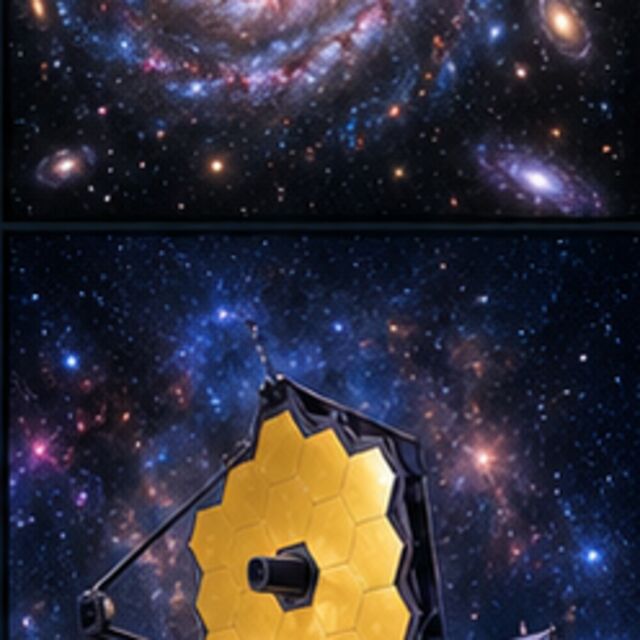
James Webb’s golden main mirror is made of 18 hexagonal segments. It collects faint infrared light from distant stars and galaxies.
6.5 m